

If you have spent time learning about curls, you know how varied waves, spirals and coils can be. At Curliculum, we are taking a closer look at the broad groups of wavy, curly and tightly coiled hair. Our wave guide covers the first of these; this article focuses on type 3 curls: 3A, 3B and 3C.
Not sure what those labels mean, even though you clearly see curls in the mirror? Read on to discover:
- The differences between 3A, 3B and 3C.
- What matters besides curl pattern when choosing care.
- How to build your own curl routine.
What do 3A, 3B and 3C mean?
A widely used visual classification divides hair into four broad groups:
- 1: straight.
- 2: wavy.
- 3: curly.
- 4: tightly coiled or Afro-textured.
Waves and curls therefore generally fall into groups 2, 3 or 4, each with A, B and C subcategories. It is a descriptive guide, not a precise diagnosis, and you may have several patterns on one head.
What does type 3 look like?
- 3A: visible, relatively loose loops rather than mainly S-shaped waves; their size is sometimes compared to a cork.
- 3B: springier, more closely formed spirals, often compared to the width of a finger, with a fuller appearance.
- 3C: tighter corkscrew curls, often compared to the width of a straw or pencil, with considerable natural volume.
The challenges vary as much as the shapes. Looser 3A curls may need help with definition or volume, while tighter curls may need more attention to dryness. Pattern alone does not decide the routine, so let’s look further.
What else affects the choice of curl products?
Shopping by curl pattern can be a convenient starting point. Choosing a 3A–3C category narrows the selection, but it is not the whole answer.
Porosity also matters. It describes aspects of how easily the hair takes up and loses water and is related to the condition of the cuticle. Picture the cuticle as overlapping scales: a relatively intact surface tends to be smoother, while a more weathered or disrupted surface may feel rougher.
What difference does that make?
Curls, porosity and moisture
Conditioning and moisture are central to many curl routines. Dryness and a rough, frizzy appearance can improve with appropriate care, but the amount still matters. Some tighter curls enjoy richer conditioning, while easily weighed-down 3A curls may prefer lighter formulas. Strand thickness and condition are important alongside pattern.
More porous hair can take up water readily but may also lose its conditioned feel quickly. The practical aim is to help the surface remain manageable and reduce excessive moisture loss. A suitable conditioner and styling product can help; use comfortably lukewarm water rather than relying on cold rinsing to “lock” the cuticle.
Lower-porosity hair may resist wetting or feel coated when products are too rich. Lighter formulas and thorough distribution can help. Gentle warmth during a treatment may be useful if the directions allow it, but you do not have to force the cuticle open or use very hot water.
Curl tip: Porosity is affected by several things, including colouring, lightening and repeated high heat. You may have seen the water test: floating shed hairs are described as low porosity, and sinking hairs as high porosity. Treat that result cautiously, because surface residue, air and other factors influence whether a strand floats. It cannot reliably diagnose porosity on its own.
Another home observation is feel: slide your fingers gently along a strand and notice whether it feels smooth or rough. This too is only a clue, not a definitive test. Consider the hair’s history and behaviour across washes as well. Our porosity guide explores the topic in more detail.
Build a routine of your own
More people have discovered their natural texture in recent years, including many who used straighteners from their teenage years onwards. Our curl-transformation stories, including “I Had Curls All Along!” and “Goodbye Straighteners”, may feel familiar.
During the pandemic, social media helped the Curly Girl Method reach a wider audience. Many variations now exist, but their shared aim is to support natural curl definition through suitable products and gentle handling. A product does not have to be entirely natural to fit a useful routine, and ingredients should not automatically be labelled harmful because a method excludes them.
Curl tip: Our article on whether CGM is for everyone compares the original approach, adaptations and their advantages and limitations.
Whether you follow CGM, an adapted routine or ideas from curl creators, the important part is finding your own rhythm. Decide how often to wash, when a refresh is enough, what products to use and which techniques suit you. Here is one way to structure it.
Cleansing curly hair
Start by assessing buildup. A suitable clarifying shampoo can be useful when residue leaves curls limp or your usual routine stops working. It may also be relevant after exposure to pool water or products that your regular cleanser does not remove adequately. Choose the cleanser for the residue involved; not every wash needs to be a deep cleanse.
Look for clarifying products suited to your hair and scalp.
For regular washing, one option is cowashing with a dedicated cleansing conditioner. It is not the same as washing with any ordinary conditioner. Apply to wet hair, massage and rinse according to the directions. It combines cleansing with conditioning, which some curls find less drying.
Another option, especially for fine or easily weighed-down strands, is a gentle low-poo shampoo. Low-poo does not necessarily mean entirely natural; it refers to a gentler shampoo approach. Compare it with cowash and judge which leaves your scalp clean and your curls comfortable.
Explore dedicated cowashes and gentle shampoos according to your hair’s needs.
Conditioning and moisture
Conditioner is an important tool for softening the lengths and improving detangling. Some hair benefits from a separate rinse-out conditioner even after cowash, while other routines need less. Detangling while conditioner provides slip is often more comfortable than pulling through dry curls.
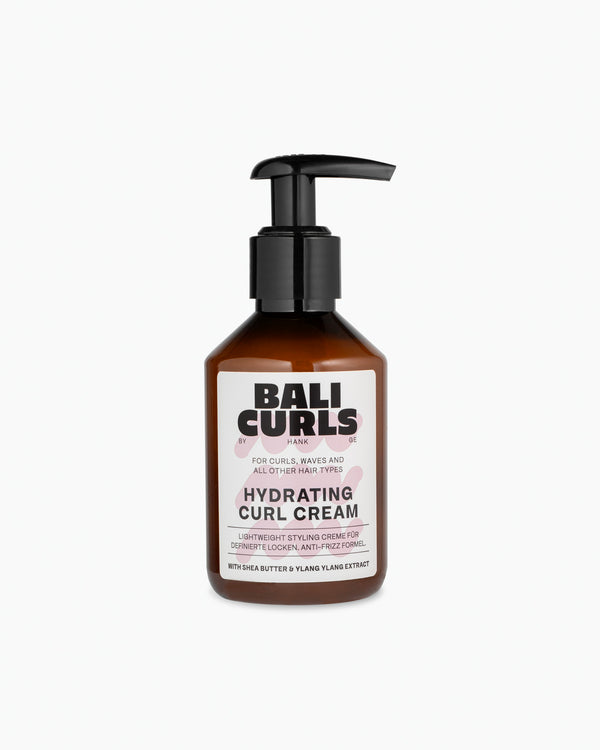
Use a rinse-out conditioner, then add leave-in if you need more conditioning. A little leave-in may also help during a refresh, restoring shape between washes without repeating the full wash-day routine.
Choose rinse-out and leave-in products with a richness suited to your lengths.
Some curls also benefit from a mask or deep conditioner around once or twice a month, or more often if the hair and instructions call for it. Dry ends, a rough feel or a loss of shine may suggest that your current conditioning step needs adjusting, but adding more product is not always the answer.
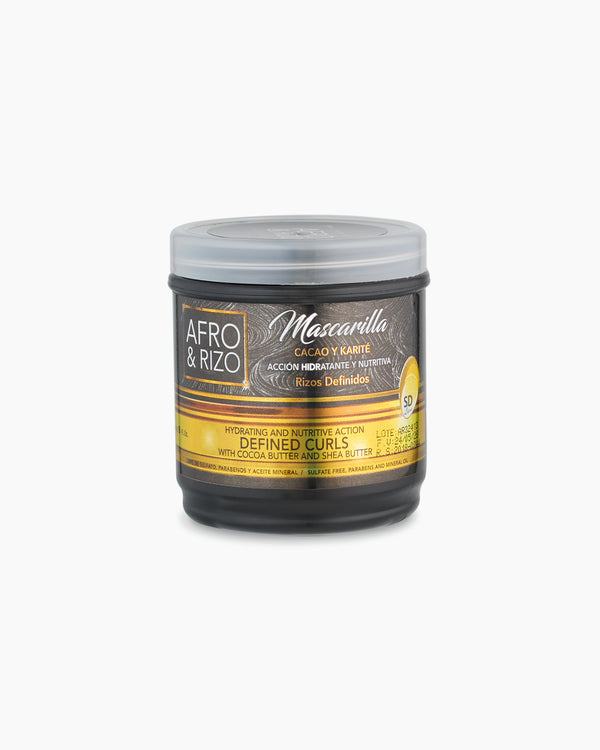
Consider a suitable mask when your regular conditioner is not enough.
Curl tip: If cowash, rinse-out and leave-in still sound confusing, our conditioner guide explains when each is used.
The protein question: should products contain it?
Alongside conditioning, some hair responds well to protein-containing products that can temporarily improve feel and manageability. Recognising what it needs is not always simple. A strand that stretches unusually and fails to spring back can be one observation, but a stretch test alone does not diagnose a protein deficiency. Our moisture-and-protein guide explains the balance in more detail.
Protein ingredients are found throughout haircare, from shampoo and cowash to conditioner, masks and stylers. If your hair dislikes their effect, check the full routine rather than only the mask. One product may contain several protein-derived ingredients.
If hair feels dry, stiff or brittle after repeated use, consider trying less protein or a protein-free alternative. Those signs have other possible causes too, so compare one change at a time. Even coarse, porous curls do not automatically need a large amount of protein.
Curl tip: Aim for hair that feels comfortably conditioned and resilient. Some routines need more conditioning, others benefit from occasional protein, and some use both. Follow treatments with appropriate conditioning where the instructions recommend it.
Styling curly hair
Styling begins before drying. Apply a suitable holding product while the hair is wet or damp: gel, pomade, custard or another formula that helps the curl shape remain defined.
A curl activator can be useful for enhancing the appearance of looser curls, including some 3A patterns that sometimes look more wavy. If you use one, apply it before your holding product as directed.
There are many styling techniques, and finding your favourite is part of building the routine. Brush styling with a suitable tool such as a Denman brush may help some looser curls form; tighter patterns may respond well to stronger hold. If your styler creates a cast, wait until the hair is completely dry before gently scrunching it out.
Consider porosity, thickness and how easily the hair gets coated when choosing styling textures. Heavy oils and butters can weigh down easily coated hair, while some drier, more porous lengths prefer richer products. That is a starting point rather than a rule: high porosity does not mean every heavy formula will suit you, and low porosity does not mean heat is required. Light foams, gels and sprays are useful options when you need less weight.
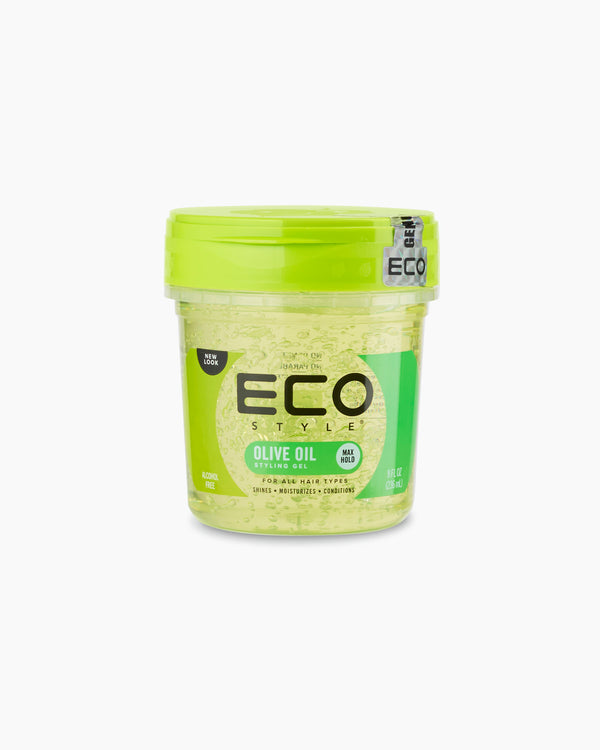
Choose styling products according to the result and hold you want.
Curl tip: Drying also changes the result. You can air-dry or use a diffuser with comfortable heat and airflow. Our comparison of both methods can help you decide which suits your hair and schedule.
That is a lot to take in, but you do not need to perfect everything at once. Living with curls involves turns, experiments and the occasional unexpectedly straight section. With patient observation, you can find techniques and products that let your natural texture stand out.