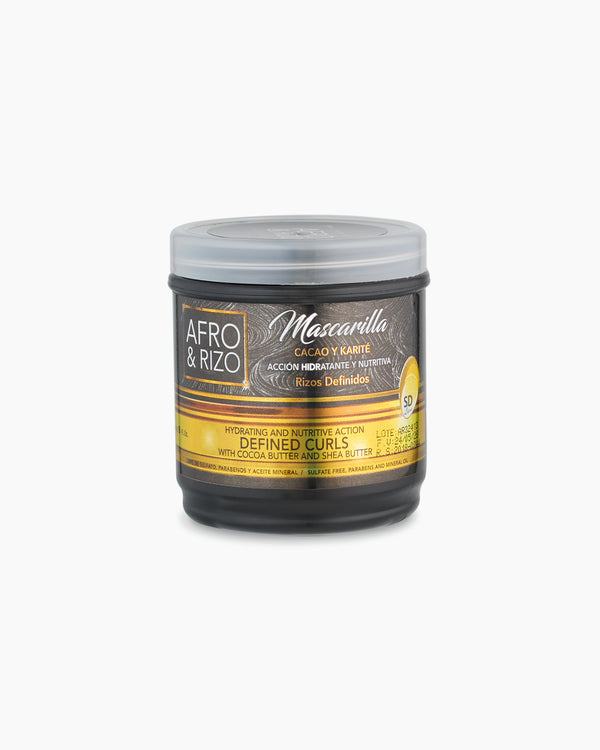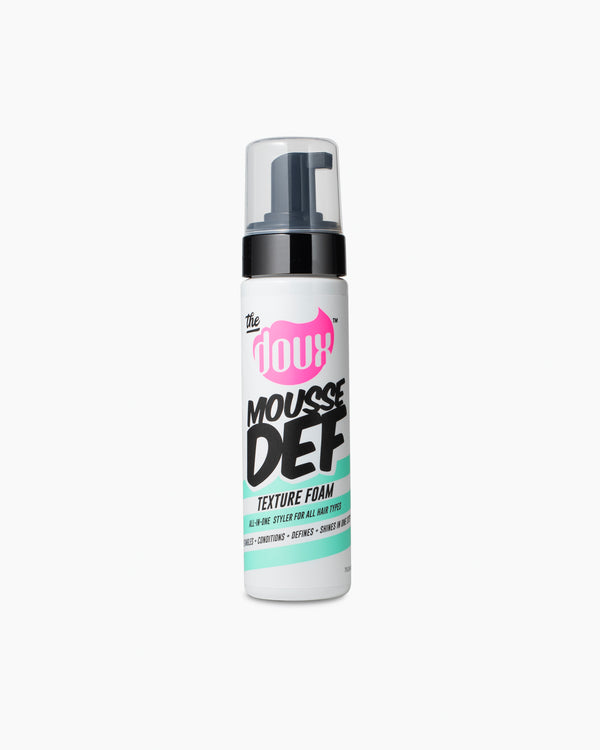



Before choosing between moisture and protein, it helps to understand the hair fibre. Hair is made mainly of keratin, a structural protein, and also contains pigment, water and other components. Its water content varies with the environment and condition. Dryness, breakage or poor definition cannot be diagnosed simply as a fixed protein-to-water imbalance.
Still, comparing how conditioning and protein-containing products affect your hair can be useful. In this article:
- What is protein, and what can it do in hair care?
- When might a protein-containing product be useful?
- How can you choose your next step?
What role does protein play in curly hair care?
Keratin forms much of the hair’s structure. Repeated high heat, chemical treatments or rough handling can damage the fibre. For many people with waves and curls, attempts to smooth or straighten hair have involved these stresses.
Protein-containing hair products may improve the feel of damaged strands. Hydrolysed proteins and other conditioning ingredients can form a temporary film or interact with damaged areas, depending on the formula. This can improve manageability or reduce a rough feeling, but cosmetics do not permanently rebuild a damaged fibre into untouched hair. Reducing further damage and trimming affected lengths still matter.
When might hair benefit from a protein product?
There is no rule that every hair type needs the same frequency, or that tighter curls automatically need more protein. Consider the hair’s condition, porosity, treatment history and response to products. Elasticity can offer observations, but it is not a reliable diagnosis by itself.
Elasticity: what can a strand tell you?
A wet strand may stretch, but its response depends on many factors. The familiar home stretch test is sometimes used in curl routines; a precise percentage such as 30% is not a dependable home threshold. Do not repeatedly pull attached hairs to test them. If you observe a naturally shed strand, treat the result as one clue only.
- If a strand stretches and returns, that may indicate some elasticity, but it does not establish that a monthly protein mask is necessary.
- If it snaps with little stretching, dryness or damage may be involved. Review gentle handling and conditioning instead of assuming moisture alone is the answer.
- If it stretches and does not return, damage may be involved. A suitable protein-containing product could be worth trying, but the result does not justify automatically using protein at every wash.
More is not always better. A formula may leave your hair feeling stiff, coated or brittle. Reduce or stop products that create an unpleasant change. A stiff feel does not on its own prove a specific “protein sensitivity” or allergy.
Porosity and protein
Higher-porosity or chemically treated hair may appreciate conditioning formulas that temporarily improve its surface. One protein-containing shampoo, conditioner or leave-in is an option to evaluate, not a requirement for each wash. Our porosity guide explains the terminology.
Lower-porosity hair may feel weighed down by certain products, including some rich or protein-containing formulas. That does not mean all proteins inevitably cause build-up. If hair feels overly coated, unusually stiff or limp, simplify the routine, review cleansing and pause the products associated with the change. Reintroduce them less frequently if appropriate.
Moisture or protein: how do you choose?
Rather than treating every concern as a diagnosis, use the following descriptions to plan a careful adjustment.
When hair feels dry
Possible signs: Roughness, dullness, frizz, poor definition or fragile ends. A strand may break easily. Split ends indicate damage and cannot be permanently mended with hydration. Product choices, handling and environmental exposure can all play a role.
What to try: Review cleansing strength, use suitable conditioner and consider a conditioning mask. Gentle curl-friendly techniques, a targeted refresh and, when useful, a small amount of oil may improve softness and reduce friction or moisture loss. Choose the complete formula rather than assuming every sulfate-free product is automatically ideal. Our step-by-step curl-care guide offers a practical framework.
When a protein-containing treatment may help
Possible signs: Hair may feel weak, unusually soft, limp or difficult to style, especially after repeated heat, colouring or other chemical treatment. These signs overlap with other concerns. Excessive shedding from the roots is not evidence that hair needs topical protein and may require professional assessment.
What to try: Introduce one suitable protein-containing treatment or everyday product, following its directions. Review the result before deciding frequency. Some people prefer occasional use, others a regular formula; a monthly mask or every-wash product is not a universal prescription. Expect a temporary cosmetic effect, not permanent repair of all structural damage.
Do not neglect conditioning when using protein-containing care. Some treatments recommend a conditioner afterwards, while others already include conditioning ingredients. Follow the instructions and aim for hair that feels comfortable and manageable, without unnecessary layering.
The useful balance is a routine that suits your actual hair, not a perfect ratio you must calculate. Curliculum offers products to explore, and advice can help if you are unsure where to begin.
Explore protein-containing hair care.