


Detangling curly hair can feel like a skill of its own. If an ordinary comb has ever become stuck, pulled painfully or left a cloud of frizz instead of defined curls, you know the frustration. A suitable comb or brush can make the routine more comfortable and help you achieve the finish you want. How do you choose one?
In this article
- Why your choice of tool matters
- Comb or brush: which is better?
- When to detangle
- How to use your tool
- Common questions about curly hair brushes and combs
Why does your choice of comb or brush matter?
A comb is not just a comb when it comes to your individual texture. Bends and tangles can make curly hair vulnerable to mechanical damage, so the tool and the way you handle it matter.
Closely spaced teeth or bristles may catch in curls and meet resistance. Some brush-tip shapes or rough seams can snag too. The result may be pulling, broken strands, disrupted definition and frizz. Not every conventional brush is unsuitable, but a tool that repeatedly catches is worth reconsidering.
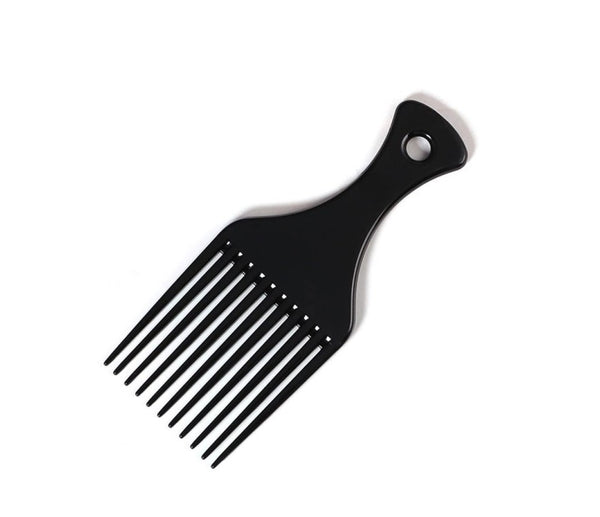
A wide-tooth comb leaves more room for strands to pass. Many curl-friendly brushes use smooth, flexible bristles designed to move with the hair. The shape, spacing, flexibility and finish all matter more than a label promising pain-free results.
What can an unsuitable tool do?
Repeated rough handling can contribute to:
- Mechanical damage, including breakage and splitting
- Disruption of curl groups and more frizz
- An uncomfortable, frustrating routine
Curl tip: If frizz is a familiar problem, the brush may not be the only factor. Our frizz-care guide looks at other helpful adjustments.
A suitable tool used gently can make detangling easier, help distribute products and support styling definition or volume. No tool guarantees zero pain or breakage if it is forced through a knot.
Comb or brush: which is better for curls?
There is no universal answer. Your texture, current hair condition and desired result all influence the choice.
When might you choose a wide-tooth comb?
This classic option can be useful for:
- Detangling during wash day: Conditioner or a suitable mask provides slip while you gently loosen tangles and distribute the product.
- Spreading styling products: Once the hair is detangled, a comb can help distribute a gel or cream through a section.
- Working through longer hair: Sections and appropriate teeth spacing can make inner layers easier to reach.
Curl tip: I Love Riccio’s wooden comb is one example mentioned in the original article. Look for a smooth finish without rough edges, and follow its care instructions. The material alone does not guarantee a frizz-free result.
When might a brush be useful?
A suitable brush can help with:
- Shaping: Some styling brushes arrange strands into curl groups.
- Waves and finer curls, such as 2A–3B: Flexible bristles may feel more comfortable, provided the brush suits the actual hair rather than just the type number.
- Volume: Certain designs help lift sections during styling.
- A more substantial refresh: With enough moisture and slip, a brush can reshape selected sections on the second or third day. Our refresh guide has more ideas without a full wash.
Curl tip: The I Love Riccio Gentle Brush Detangler is an example of a flexible detangling design with a spiral structure. Even with a flexible brush, work slowly and do not force it through a knot.
What makes Denman brushes popular?
Denman brushes are well known in curl styling. The Denman D3, with its shaped handle and smooth nylon pins, is often used to organise damp, conditioned sections. It is an option rather than essential equipment for everyone. Choose the model and technique that suit your hair. If preserving defined curls is your goal, brushing them dry will usually change that shape.
Brushes for volume and definition
Denman is not the only option. The Bounce Curl Volume Edgelift Brush is a multi-purpose design intended to separate and shape sections while encouraging a fuller finish. It may be useful when you want more volume, including near the roots.
The Pretty Curly Girl Small Clump Brush is another styling option, designed to help arrange smaller curl groups. The finish depends on section size, technique and product, not the brush alone.
Curl tip: You may find both a comb and a brush useful: one for wash-day detangling and product distribution, the other for styling or a targeted refresh. You do not need every tool to build an effective routine.
When is the best time to detangle curly hair?
For many people, detangling works best when the hair is wet or damp with conditioner or another product providing slip. The reduced friction can make the tool move more smoothly. Wet hair is not automatically stronger, however: it still needs careful handling and can be damaged by pulling.
Dry brushing often separates curl groups and increases frizz. Whether that matters depends on the style you want, but forcing through dry tangles is not a gentle approach.
Curl tip: Our article on nine common care mistakes explores dry brushing and other habits worth reviewing.
Useful opportunities include:
- During washing: With conditioner or a suitable mask, detangle from the ends towards the roots using fingers, a wide-tooth comb or a detangling brush.
- After washing, before styling: Use a suitable tool to distribute leave-in or styler through already loosened sections.
- During a refresh: If a section needs brushing, dampen it adequately and add appropriate slip. A light mist alone may not be enough for a large tangle.
How should you use a comb or brush?
The right tool is only half the task. Technique is equally important.
Start at the ends and gradually work upwards. Beginning at the roots can push knots together and make them harder to release. This principle is useful across curl patterns.
Detangling with a comb or detangling brush
- Divide the hair into manageable sections.
- Use slow, smooth strokes and support the section to avoid pulling the scalp.
- When you meet a knot, stop. Move slightly lower and gently work it loose, using fingers if needed.
- Once a section is fully detangled, you can distribute a suitable product from nearer the roots towards the ends, avoiding the scalp if the product is not intended for it.
Shaping curls with a brush
- Gently cup and scrunch the damp hair upwards to encourage curl groups.
- Guide the brush through a detangled section in a controlled direction, without pulling against resistance.
- Try brush styling to arrange individual groups and gently turn the brush as appropriate for its design.
- Scrunch again by hand from below if that helps the shape you want.
Using a brush for volume
Follow the manufacturer’s technique for your model. With a design such as the Bounce Curl Volume Edgelift Brush, a starting approach is:
- Apply your chosen styling product to wet or damp hair as directed.
- Divide into sections.
- Lift the section near the roots.
- Guide it gently away from the scalp without tension.
- Turn the brush so hair passes through the bristles and, where appropriate for the design, the edge spaces. This can create smaller groups and a fuller finish.
- Suitable root clips during drying can provide additional lift. Remove them gently.
Curl tip: If fine curls lose their shape within half a day, our five tips for fine curly hair explore products and handling that may help without adding unnecessary weight.
Finding tools that work for you
A well-chosen tool can save effort and make the routine more comfortable. It can also reduce the unnecessary pulling that costs both patience and broken strands.
Hair care changes over time. If your hair no longer responds as expected, review the wider routine rather than blaming the tool alone. Many people need a little guidance at different stages. Ask for advice when useful, and explore combs and brushes at Curliculum.